Telecom and Beyond
In telecommunications construction, things rarely go according to plan. A storm tears down a tower. A fiber route runs straight into solid rock. A 5G deployment deadline looms, but the hardware isn’t arriving on time.
In moments like these, the only viable option is to innovate. Crews splice fiber in the back of a truck, reroute lines through unexpected terrain, or fabricate custom brackets on-site to keep projects moving. These aren’t textbook solutions—but they work. Telecom innovations in construction often leads to better, more resilient practices long after the crisis has passed.
However, this isn’t just a story about telecom. It’s the universal truth of innovation under pressure.

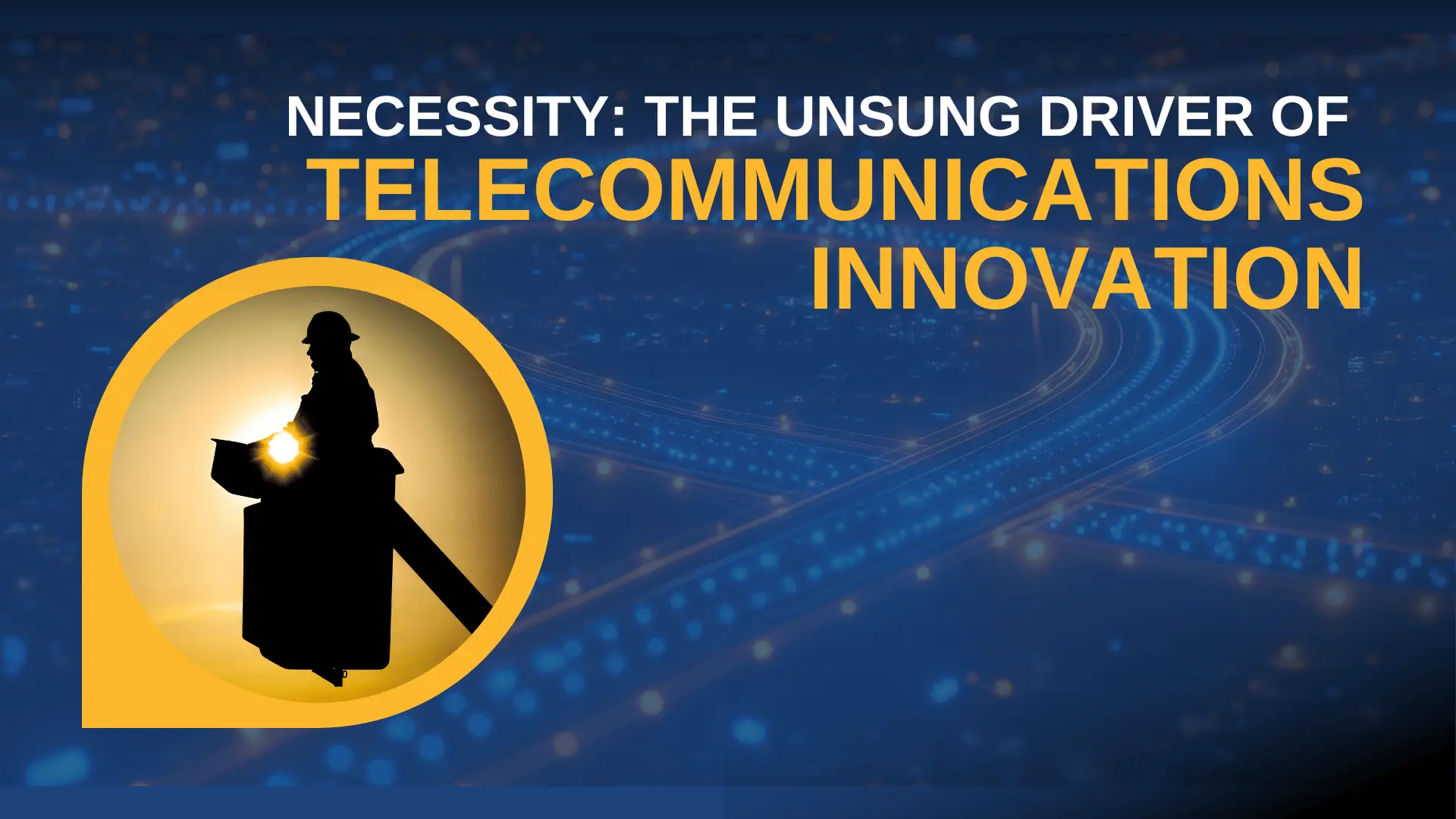
- Bucket Truck
- Overlash Repaired Lines
- Service Restoration
Why Necessity Fuels Innovation in Telecom and Beyond
When an emergency response is required, we cut through the noise and zero in on what truly matters: restoring service, connecting communities, or meeting customer needs. In telecom, that might mean setting up temporary microwave links to reconnect a disaster-struck town. In software, it’s the midnight release of an emergency security patch. As a result, constraints sharpen our creativity. They force solutions we might never have imagined if resources, time, or conditions were ideal. Telecom innovation in construction play a crucial role in overcoming challenges, ensuring connectivity, and meeting customer demands.
Real-World Telecom Innovations Sparked by Necessity

- Storm Restoration: After hurricanes, telecom crews restore connectivity by any means necessary—sometimes stringing temporary lines or setting up mobile units in devastated areas. The goal: get people reconnected, fast.
- Rural Broadband: Bringing internet to remote communities often means improvising. Crews adapt when trenching isn’t possible, finding alternative ways to mount or route fiber. The result: connectivity where others said it couldn’t be done.
- 5G Deployment: With carriers racing to roll out service, urban crews fabricate solutions on the spot—attaching small cells to light poles or building facades with custom hardware to meet aggressive deadlines. The gaol: to provide faster, more reliable service in dense urban settings.
These examples of telecom innovation in construction also mirror trends in other industries: hospitals improvising during equipment shortages, teachers rethinking learning models during the pandemic, manufacturers redesigning supply chains overnight.
Innovation in Other Infrastructure Industries
The principle of innovation under pressure extends well beyond telecom. In energy, for example, utility companies have adapted quickly to climate disruptions by developing microgrids and battery storage systems for remote or disaster-prone areas. In transportation, rapid innovation during the pandemic led to contactless fare systems, digital route management, and flexible worksite logistics. Even construction firms have begun using modular design and 3D printing to solve supply chain issues and labor shortages.
These fields share a common thread: when traditional methods break down, necessity pushes teams to rethink their approach. The lessons learned in telecom—resilience, adaptability, and smart deployment—are increasingly relevant across the broader infrastructure landscape.
What We Can Learn: Turning Crisis into Innovation
Ultimately, necessity isn’t just a challenge—it’s a catalyst for innovation. Some of the most impactful innovations across telecom, software, healthcare, education, and manufacturing were born from urgent constraints. The key is balance: act quickly when you must, then return to reinforce, refine, and scale those quick wins into long-term solutions. And necessity isn’t the only driver of telecom innovation. As the industry evolves, technologies like edge computing, AI, and decentralized infrastructure are reshaping how we build and maintain future-ready networks.
Explore how these emerging technologies are setting new standards in telecom infrastructure in our related post: The Future of Telecom: Innovation Starts at the Edge.
According to industry analysts at IDC, telecom providers are facing growing pressure to innovate across all layers of their networks—not only to improve performance but to stay competitive amid rapid digital transformation.
Their research emphasizes that investments in AI, edge, and autonomous operations are no longer optional—they’re becoming urgent priorities as expectations for speed, uptime, and flexibility continue to rise.
Necessity also reshapes team dynamics. Crews become more agile, communication tightens, and decision-making accelerates. These high-pressure situations foster a culture of ownership and adaptability that often leads to stronger long-term performance. Leaders who recognize this can turn short-term pressure into lasting operational improvement.
In construction and in code, necessity teaches us this: when conditions force us to think differently, we often discover better ways forward. In short, crisis becomes catalyst, and limitation becomes innovation. And the solutions built under pressure often outlast the problems that created them.
I’d love to hear your perspective: What’s one innovation you’ve seen whether in telecom or beyond-that was born purely out of necessity? Whether you’re in the field, behind a screen, or leading strategy, necessity has likely shaped how you solve problems. The more we share these stories, the better prepared we all are to adapt and lead. Let’s keep building forward—together.
#NecessityDrivesInnovation #BuildingThroughNecessity #Leadership #ProblemSolving #Resilience #FutureOfWork
💡 Facing telecom challenges that demand fast, resilient solutions?
OSP Technologies turns field obstacles into long-term innovation. Contact us today to see how we can help.